Prevention is an active process of creating conditions which promote well-being. Prevention of alcohol and drug use disorders involves activities designed to encourage a life-style which is free from the use of mind altering substances.
ADDS provides and promotes activities which encourage a healthier life-style. These activities can be anything from drug free workplace presentations, presentations in the school setting, to promoting a drug free community event.
The Prevention department partners with many community organizations to make these activities happen. The Iowa Department of Public Health, United Way, and other local grants give prevention the means to do the work in the community.
Check out our most recent Prevention Newsletter to stay informed about what our team is up to now!
Please also check out our Teen Mental Mental Health and Substance Abuse Prevention Guide developed by the ADDS Prevention Team!
ADDS Prevention Educational Programs
Driver’s Education Presentations-ADDS prevention specialists present information on alcohol and the dangers of driving under the influence to area driver’s education classes.
Gambling in the Workplace-ADDS assists businesses with creating a safe and positive environment that encourages an informed gambling experience. Our prevention specialists can help businesses establish workplace gambling policies and identify those employees who may be impacted by problem gambling. We can then link those employees impacted to support and treatment.
Information Distribution-ADDS has a wealth of brochures and posters on various topics available on request.
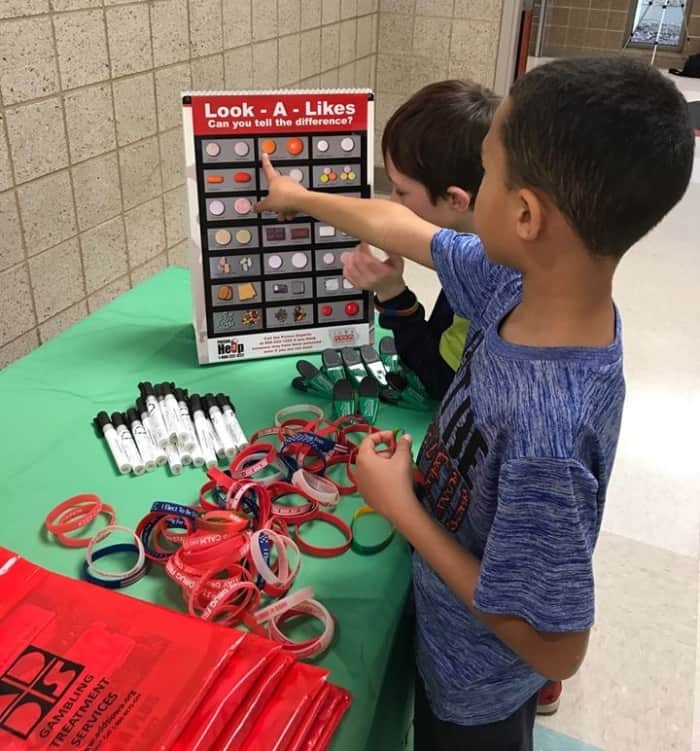
Health Fairs and Community Events-ADDS prevention staff set up tables, distribute information, and provide education at health fairs and community events.
Presentations for Groups-ADDS prevention staff can provide single or multi session presentations on various topics, depending on the topic and your group’s needs.
OWI Class Instruction-All our prevention specialists are trained instructors in the Prime for Life curriculum. We provide instruction in this DOT required class for those who have received an OWI and are seeking to have their license reinstated.
Evidence-Based Curricula
The Curriculum‐Based Support Group (CBSG) Program is designed for children and youth who have experienced or are experiencing adversity, trauma, and toxic stress in their lives. The adverse experiences can include a variety of familial and environmental experiences: physical, sexual, and emotional abuse, substance misuse and addiction, mental illness, incarceration of a close relative, violent treatment of a family member, poverty, or parental separation or divorce. As a result, their cognitive functioning or ability to cope with negative emotions may be impaired and can lead to unhealthy coping mechanisms. The goal of this program is to teach lifelong skills to better equip these children. CBSG is a research‐based education program approved by IDPH lead by trained facilitators. The program focuses on teaching critical life skills and offering emotional support. The objective is to build resilience and protective factors. Kids develop caring relationships, hear messages of high expectation, and have opportunities for participation. It is designed to be taught in small groups in 10‐12 sessions that are 30 minutes in length. The program teaches the 5 domains of SEL: Self Awareness, social awareness, relationship skills, sense of purpose and future, and responsible decision making. Self‐awareness enables youth to recognize the impact of emotions, thoughts, and values and how they influence behavior. Social awareness develops perspective about and empathy for others. A sense of hope and purpose for the future is established, giving a child hope and control. Responsible decision making involves making constructive choices based on ethical standards, safety concerns, and social norms.
Generation Rx is a research‐based program developed by the Ohio State University College of Pharmacy and Cardinal Health Foundation. This program teaches safe medication practices for life. There is an elementary program for K‐5 consisting of several sessions and a teen program for grades 6‐12 also consisting of several sessions. There are also university, adult, and older adult components. The core messages are: Only use prescription medication as directed by a health professional. Never share your prescription medications with others or use someone else’s medications. Always store your medications securely to prevent others from taking them, and properly dispose of medications that you no longer need. Be a good example to those around you by modeling these safe medications‐taking practices and discussing the dangers of misusing prescription drugs with your family, friends, colleagues, students, or patients.
Minor in Possession‐Prime for Life is an evidence‐based program to motivate alcohol and drug behavior change. The 4.5 hour syllabus includes a participant self‐assessment, a look at risk factors, health and life consequences of high risk choices, and a way to build low risk guidelines. The program can be used for minors in a school setting or juvenile diversion through the court system.
HALO(Healthy Alternatives for Little Ones)‐HALO is a 6‐12 session evidence‐based program for children ages 3 to 6. It can be taught in a daycare, preschool, library, or kindergarten setting. It is a health and prevention education program designed to empower children to make healthy
choices. The goal of HALO is to reduce the risk for future alcohol, tobacco, and other drug use as well as encourage a healthy diet and physical activity. Children will strengthen their sense of self, practice communication skills, begin to recognize drugs in their various forms, including
medicines, learn safety precautions for drugs, practice techniques to reduce stress, and learn how eating well and exercising helps you stay healthy.
Stanford Medicine Tobacco Prevention Toolkit-a theory-based and evidence informed aimed at preventing middle and high schoolers use of tobacco and nicotine. There are lessons for 1, 5, 8, and 10 sessions.
Health Fairs or Other Special Events‐ADDS prevention staff is available to set up a table with informational literature at any special event.
One Time Presentations‐ADDS prevention staff can do presentations on various topics on request for classrooms, after school groups, and any other group needing our services.